
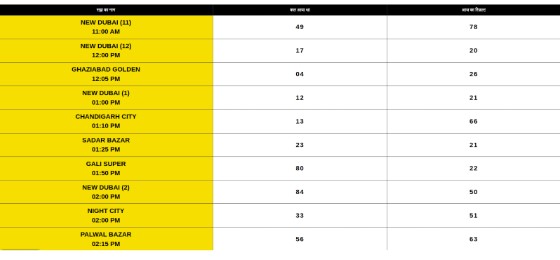

Long-term pattern tracking has become a major part of how users engage with digital number-based markets. Instead of only checking the daily A1 satta result, Delhi bazar Satta result, or satta result shri ganesh, many users analyze historical data to identify trends, repeated sequences, and numerical behaviors that could help them understand the flow of specific markets. Platforms like A1satta, A1 Satta, A1-satta, and A1 Satta online provide users with easily accessible charts and archives, which serve as the foundation of this analytical activity.
Long-term tracking requires consistent data collection and comparison across multiple months and years. Users who follow markets such as Shri Ganesh Satta King, A7 Satta King, Delhi Bazar Satta King, Old Taj Satta, and up state satta are particularly known for studying number patterns closely. This article explores the most common methods people use to track long-term patterns, how historical numbers influence user behavior, and why platforms with strong archives like A1 satta chart remain so valuable.
1. Using Comprehensive Charts as the Primary Data Source
Charts are the backbone of long-term pattern analysis. Platforms like A1satta and A1 Satta maintain extensive charts, including the popular A1 satta chart, which organizes results across months and years. These charts allow users to look at older numbers systematically and detect any recurring patterns or sequences.
Charts for markets like Delhi Satta King, Old Taj Satta, Shri Ganesh Satta King, and A7 Satta King are updated regularly so users can review long-term data. The structure of these charts, whether monthly grids or yearly sequences, helps people visually identify number groups that appear frequently. This visual clarity plays a significant role in long-term analysis.
2. Comparing Monthly Patterns to Identify Repetition
One of the most common practices in long-term tracking is comparing monthly data. Users who follow markets like up state satta, Delhi bazar satta king, or satta result shri ganesh closely examine previous months to identify repeated occurrences. For instance, if a particular number appears multiple times across different months, users take note of it as part of a recurring trend.
Monthly comparisons become even more meaningful when users follow charts for multiple markets. Someone who tracks A1 Satta king, A7 Satta king, and Satta a1 will compare patterns across all three to see if similar sequences show up. These cross-market comparisons help users build a deeper understanding of number movement over time.
3. Identifying High-Frequency and Low-Frequency Numbers
Frequency analysis is another major component of long-term pattern tracking. Users observe how often certain numbers appear in charts like A1 satta chart or older series such as old taj satta. High-frequency numbers draw attention because they appear repeatedly over the months or years. Low-frequency numbers are also important because their rarity sometimes sparks interest in analyzing why they appear less often.
Platforms like A1 Satta online make this analysis easier by organizing past results clearly and updating historical sequences regularly. Whether users track shri ganesh satta king, Delhi bazar Satta result, or a7 satta, frequency-based analysis helps them develop numerical expectations over long periods.
4. Studying Seasonal and Time-Based Trends
Some users believe that different seasons or specific periods of the year show distinct numerical behaviors. For example, they may look for trends in winter versus summer or compare number distributions across festival seasons. Platforms like A1satta and A1 Satta help users track season-based behavior by storing organized annual data.
Markets such as Delhi bazar Satta result, up state satta, and satta result shri ganesh are reviewed seasonally to check if the exact numbers appear repeatedly during certain months. Though there is no official rule that links seasons with number patterns, users often find seasonal tracking useful because it gives them a broader perspective on long-term patterns.
5. Cross-Market Comparisons to Detect Shared Patterns
Long-term pattern analysis does not stay limited to one market. Users often compare results from different markets to detect if certain numerical trends appear across multiple platforms at similar times. For example, they may check whether a number from A1 Satta king appears around the same period on A7 Satta king or Shri Ganesh Satta king.
Similarly, charts for Delhi Satta King, old Taj Satta, and up state Satta are often reviewed together because these markets have a long-running history and abundant archived data. By comparing multiple charts, users expand their perspective and uncover broader patterns that span across the entire ecosystem.
6. Analyzing Deviations from Expected Patterns
Another key method of tracking long-term data involves understanding deviations. When a number that usually appears frequently suddenly stops appearing for a long time, users take interest. Similarly, unusual spikes where a number appears too often in a short span also attract attention.
Deviation analysis applies strongly to markets such as Delhi bazar satta king, shri ganesh satta king, and A7 Satta king, where historical patterns are well established. Platforms like A1 Satta online help users track such deviations by offering consistent and well-maintained historical records.
7. Tracking Special Historical Markets for Legacy Patterns
Older markets like old Taj Satta hold special significance for long-term pattern trackers. These markets have decades of historical data, and users analyze them to understand classic number behavior. Older charts are considered more reliable for trend analysis because of their depth and consistency.
Platforms like A1satta and A1-satta often include archival charts for legacy markets. Users who study these charts compare old patterns with modern ones to see how number sequences evolve. This long-range comparison helps identify whether the exact numbers reappear across generations of market data.
8. Using Technology and Digital Tools for Pattern Tracking
Modern pattern tracking has become more advanced thanks to digital tools. Users now take screenshots, download charts, bookmark sequences, and use note-taking apps to track patterns over months and years. Platforms such as A1 Satta online make it easier by offering clean, organized charts that can be saved or referenced easily.
Some long-term followers track patterns from A1 satta chart, Delhi bazar Satta result, or satta result shri ganesh using spreadsheet tools. These digital records allow them to sort, color-code, and categorize numbers based on recurrence, frequency, or time intervals.
9. Group Discussions and Shared Pattern Insights
Communities play an important role in long-term tracking. Users frequently share their charts, analyses, and observations in groups. These discussions often involve comparing patterns from A1 Satta king, Satta a1, A7 Satta king, and shri ganesh satta king. Collective knowledge helps identify patterns that individuals may overlook.
These shared insights often revolve around recurring numbers, deviations, seasonal trends, and comparisons across markets such as up state satta and Delhi Satta King. Group discussions also encourage more users to maintain their own pattern-tracking logs.
10. User Experience on Mobile Platforms Improves Long-Term Tracking
Since most users track patterns on their mobile phones, platforms like A1satta and A1 Satta optimize charts for mobile viewing. This convenience allows users to revisit older results anytime and update their records.
Mobile-friendly charts such as the A1 satta chart or archived data for old taj satta make long-term analysis more accessible. Users check long-term patterns even during free moments throughout the day, making pattern tracking more consistent and habitual.
Conclusion
Tracking long-term patterns in number data involves studying charts, comparing monthly and seasonal sequences, analyzing frequency trends, reviewing historical markets, identifying deviations, and using digital tools for organized tracking. Platforms like A1satta, A1 Satta, A1-satta, and A1 Satta online play a crucial role by offering accurate charts such as the A1 satta chart, long-running histories for markets like old taj satta, and updated results including Delhi bazar Satta result, A7 Satta king, shri ganesh satta king, up state satta, and satta result shri ganesh. Users rely on these archives to observe patterns that develop over months and years, allowing them to understand deeper numerical behavior across multiple markets.
